
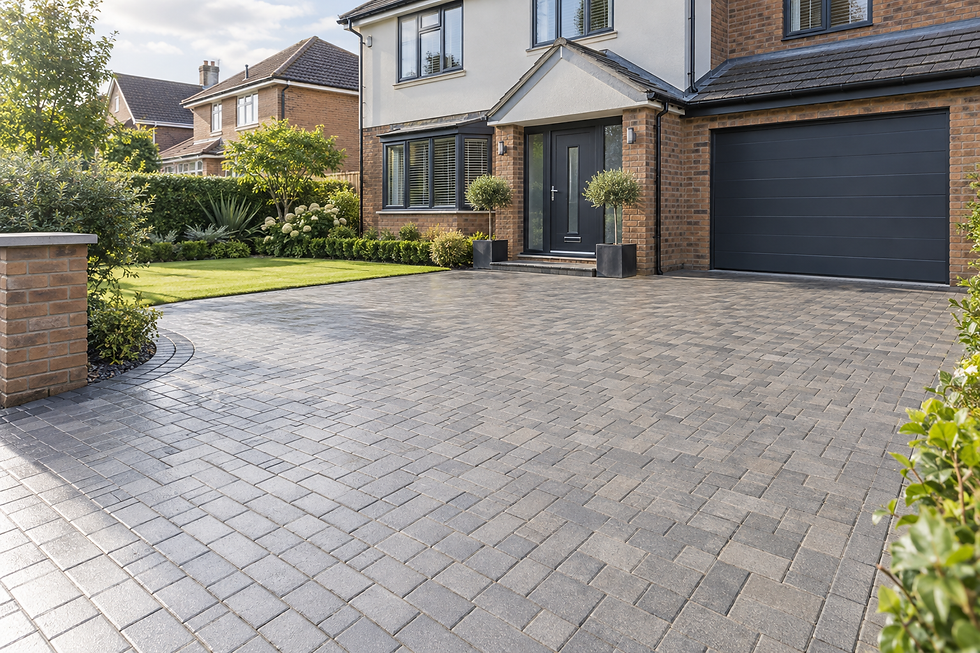
A clearer and more presentable entrance
Method matched to paving
We assess the material and condition before setting the cleaning approach.
Slippery growth removed
We target moss and algae across suitable walking and driving areas.
Price factors made clear
We base your quotation on area, staining, growth and preparation needs.
Lift embedded dirt from your entrance
A driveway deals with tyres, foot traffic, weather and organic growth every day. Over time, grease, dirt, moss, mildew, mould, lichen and algae can leave the surface dark or slippery. We use hydro-cleaning equipment to remove suitable contamination and reveal a cleaner finish. Driveway cleaning in Southend-on-Sea is planned around the paving material, total area, staining, access and level of growth. We inspect these factors before choosing the working method, with particular care around edges, drainage points and adjoining surfaces.

Prepare the whole surface for cleaning
Please move vehicles, planters, bins and loose objects before our visit so we can treat the full agreed area without working around obstacles. Our typical driveway cleaning projects range from 300 to 500 pounds. The final quotation depends on surface size, condition, contamination and any preparation required. Once cleaned, the entrance can look more cared for and heavy organic build-up is removed from trafficked areas. We explain drying and access arrangements before starting, so you know when the surface can be used again.
Frequently asked questions
How much does driveway cleaning usually cost?
Our typical range is 300 to 500 pounds. The final price depends on the size and material of the driveway, access, staining, organic growth and the preparation needed for full surface treatment.
Should I move my car before you arrive?
Yes. Please move vehicles and remove pots, bins or loose objects from the agreed area. A clear driveway gives us access to the full surface and avoids untreated patches around belongings.
What types of staining can you remove?
We clean embedded dirt, grease and common organic contamination such as moss, mildew, mould, lichen and algae. Results depend on the surface material, age and depth of staining, which we assess first.